A Christmas present from Washington DC
Part 1 – Background
On 20 December 2006, President Bush signed the “Stolen Valor Act of 2005” into law. The new law actually comprises a series of amendments to portions of the existing U.S. Code which address penalties for individuals falsely representing themselves through the fraudulent display of military uniforms, badges, awards, and the like.
The various sections of the law are a complex tangle of carefully wordsmithed statements along the lines of “if you [insert dishonorable action], then the US government can [insert penalties] to punish you”. It is vastly confusing to the majority of people who might chance to read it, and most would never consider doing any of what is proscribed within those complex statements. They are therefore puzzled why such a set of laws is even necessary.
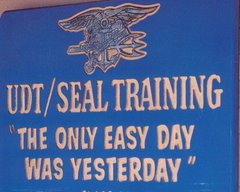
Sadly, the truth of the matter is that those laws are greatly needed, and the more recent amendments to those laws are long overdue. Imposters who falsely claim to be military veterans, offering claims of having been granted special designations such as “Sniper”, “Ranger”, “Army SF”, or “Navy SEAL”, of receiving special awards for meritorious conduct, of receiving commendations for heroic actions, or of receiving citations for gallantry under fire have reached epidemic proportions. For example, there are only about 140 recipients of the Congressional Medal of Honor still alive in our nation today. That medal is only awarded under the most extraordinary circumstances of bravery under fire and selfless conduct, the award ceremony is always a matter of public record, and the award is always presented to the recipient by the President of the United States. Yet one eastern seaboard state alone has more people driving around with Congressional Medal of Honor license plates (which can only be obtained by presenting official documentation as proof they have the medal) than all the living, bona fide CMOH recipients from all 50 states, combined. The number of imposters claiming that award across the entire nation is overwhelming!
In August of 1990 the forces of Saddam Hussein, leader of Iraq, invaded the tiny nation of Kuwait, and were involved in the wholesale rape and pillage of her citizenry. Iraq declared to the world that they had annexed the country of Kuwait. American forces, heading a multi-national coalition of military forces, began operation Desert Shield in an effort to keep the advancing Iraqi forces from spilling out of Kuwait into neighboring nations. American citizens, like other citizens around the world, were appalled by the stories of brutality coming out of Kuwait. And like those citizens around the world, they supported the measures being taken by our nation’s military forces to halt such activities.
Operation Desert Shield gave way to operation Desert Storm in mid-January, 1991, and military hostilities ensued in the form of aerial warfare and bombardment. New and imaginative technological weaponry played an active part in that aerial campaign, capturing the wonder and admiration of the world. Only one month later, in mid-February 1991, the aerial campaign gave way to the ground campaign … ultimately lasting only four days. Iraqi forces were completely overwhelmed and defeated in an unprecedented war. By the end of the first week in March, the first American troops came home and the celebrations were unmatched. There was a tickertape parade through the streets of New York City, and marching at the head of the seemingly endless ranks of victorious troops were the generals who had guided the American and coalition forces during the fighting. Yellow “come home safely” memorial ribbons were tied to everything possible; stationary and mobile items alike. Veterans of the “Persian Gulf War” were universally hailed as “heroes”, and it was most definitely socially acceptable to not only be a veteran of the war, but to be a member of the military forces on active duty, whether engaged in combat action or not.
Almost twenty years after the last US combat troops left the Republic of Vietnam, the American public appeared determined that never again would members of its military forces be derided and scorned for doing their job. Veterans proudly recounted their military experiences, and for a period of time no Gulf War veteran could step into a bar or pub but he’d be deluged with offers from friends and acquaintances who wished to buy him drinks and proffer their congratulations on a job well done.
Ten years later, in March 2003, US military forces began Operation Iraqi Freedom with a drive into the heart of Iraq. Within 30 days the initial fighting was all but finished, and the dictatorial regime of Saddam Hussein was a thing of the past. The actions of the US armed forces in this campaign have literally rewritten the books on lightning warfare, and turned the spotlight of public attention and adulation on special operations forces in particular.
Despite the fact that the war in Iraq has now settled down into a protracted “mopping up” operation in the face of determined insurgent resistance and religious civil warfare, and despite a steadily declining support for the war on the part of the American public, the members of the US military forces are held in higher esteem by American citizens than at any time since the end of WWII. Despite the difficulties the armed forces are having in meeting their recruitment goals, the re-enlistment rate in all branches of the US military is higher now than ever before in the history of our nation; veterans perceive a value in their tasking and a pride in their accomplishments; they are determined to get the job done and not leave their mates to face ‘the enemy’ without them. Pride, dignity, honor, self-respect, self-esteem, and the genuine respect of the citizenry are elements associated with members of the modern US military forces as never before.
The term “hero” is classically reserved for those very few individuals who have performed acts of extraordinary bravery under fire, against incredible odds, with a total disregard for their own personal safety. Despite this classic definition, however, virtually every veteran of the war in Iraq, no matter how mundane or elite his tasking, is constantly touted as a “hero” by the American print and broadcast media.
It is this fertile environment of admiration for the American military warrior, praise for his/her personal sacrifice and dedication, and the media’s frequent grant of the much-sought-after appellation of “HERO” that has given new life to the phenomenon of the military imposter.
Showing posts with label Stolen Valor Act - Part 1. Show all posts
Showing posts with label Stolen Valor Act - Part 1. Show all posts
Saturday, January 13, 2007

Subscribe to:
Posts (Atom)